Archives
- 2026-08
- 2026-07
- 2026-06
- 2026-05
- 2026-04
- 2026-03
- 2026-02
- 2026-01
- 2025-12
- 2025-11
- 2025-10
- 2025-09
- 2025-03
- 2025-02
- 2025-01
- 2024-12
- 2024-11
- 2024-10
- 2024-09
- 2024-08
- 2024-07
- 2024-06
- 2024-05
- 2024-04
- 2024-03
- 2024-02
- 2024-01
- 2023-12
- 2023-11
- 2023-10
- 2023-09
- 2023-08
- 2023-07
- 2023-06
- 2023-05
- 2023-04
- 2023-03
- 2023-02
- 2023-01
- 2022-12
- 2022-11
- 2022-10
- 2022-09
- 2022-08
- 2022-07
- 2022-06
- 2022-05
- 2022-04
- 2022-03
- 2022-02
- 2022-01
- 2021-12
- 2021-11
- 2021-10
- 2021-09
- 2021-08
- 2021-07
- 2021-06
- 2021-05
- 2021-04
- 2021-03
- 2021-02
- 2021-01
- 2020-12
- 2020-11
- 2020-10
- 2020-09
- 2020-08
- 2020-07
- 2020-06
- 2020-05
- 2020-04
- 2020-03
- 2020-02
- 2020-01
- 2019-12
- 2019-11
- 2019-10
- 2019-09
- 2019-08
- 2019-07
- 2019-06
- 2019-05
- 2019-04
- 2018-07
-
242 4 synthesis Somatostatin analogues are among the first p
2021-09-26
Somatostatin analogues are among the first peptide-based drugs used in cancer imaging and therapy (for review see Reubi, 2003). Treatment of tumors by the use of peptide analogues labeled with cytotoxic agents acting via specific receptors is also under investigation for neuropeptide Y (Koglin and B
-
As demonstrated by Bayliss Bayliss myogenic response
2021-09-26
As demonstrated by Bayliss Bayliss, [22] myogenic response is the ability of the blood vessels to contract in response to intraluminal pressure elevation. This is intrinsic to VSMCs, particularly in small arteries (dimeter EPZ5676 receptor polymerization within VSMCs in response to increased intrav
-
In the present study fasting blood glucose and
2021-09-26
In the present study, fasting blood glucose and insulin levels were not significantly different between GA patients and control cases. Normal mammalian cells typically acquire fatty acids from the circulation owing to insulin, which is the most lipogenic hormone in the subset of adult tissues, inclu
-
The Hedgehog signaling pathway HH pathway hereafter is
2021-09-26

The Hedgehog signaling pathway (HH pathway hereafter) is vital for development and tissue homeostasis. [4] In recent years, studying the role of the HH pathway in carcinogenesis and cancer stemness has highlighted the HH inhibitors as putative cancer therapeutics [5]. However, clinical application o
-
Isochlorogenic acid A GSK can function in regulating insulin
2021-09-24
GSK-3 can function in regulating insulin signaling and glucose metabolism. Inactivation of GSK-3 activity results in dephosphorylation and activation of GS that leads to improved glucose tolerance. However, there are additional mechanisms that can lead to increases in GS activity and improve insulin
-
Remarkably most of these molecules are also quite effective
2021-09-24
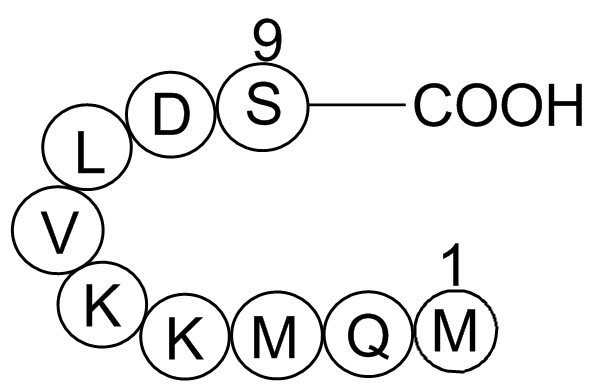
Remarkably, most of these molecules are also quite effective in interfering with the proliferation of the drug-resistant cancer cell lines, with IC50 values ranging from 0.59 to 2.93 μM against MCF-7/ADR cells, and from 0.160 to 1.17 μM against NSCLC-resistant H1975 cells. Among these molecules, com
-
Integrase inhibitors have been licensed for use
2021-09-24
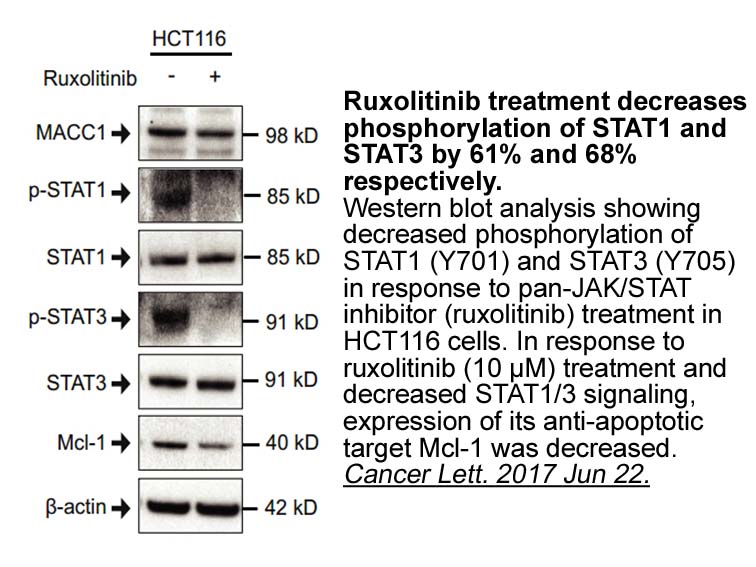
Integrase inhibitors have been licensed for use in the UK since 2008. BHIVA now recommend starting all treatment naïve patients on a regimen containing two NRTIs, plus one of the following: a ritonavir boosted PI, an NNRTI, or an integrase inhibitor. They make further recommendations for patients wi
-
Histamine in the central nervous system is produced mainly i
2021-09-24
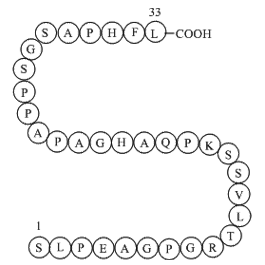
Histamine in the central nervous system is produced mainly in the tuberomammillary nucleus and is implicated in learning and memory as well as sleep and wakefulness, feeding and drinking, and neuroendocrine regulation . For instance, treatment with antihistamines not only produces drowsiness but als
-
br Mechanism of HH pathway activation in NSCLC Despite
2021-09-23
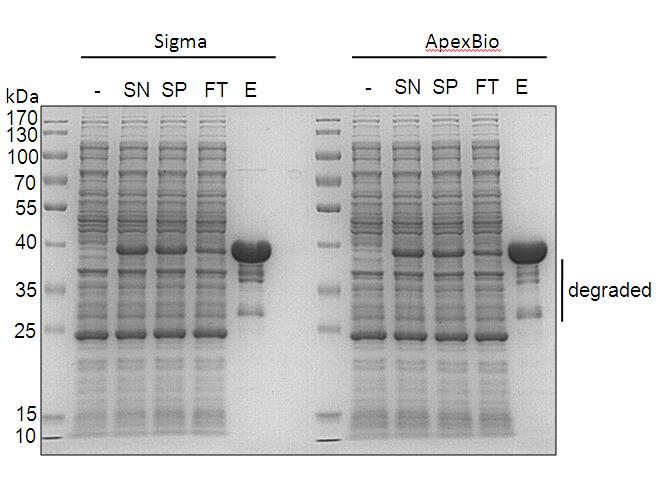
Mechanism of HH pathway activation in NSCLC Despite the role of the HH pathway in basal cell carcinoma and medulloblastoma, it has been postulated that epithelial tumors do not demonstrate cell autonomous HH ligand activity. The main evidence comes from the study by Yauch et al showing no correla
-
Notably Cu labeled dimeric exendin
2021-09-23
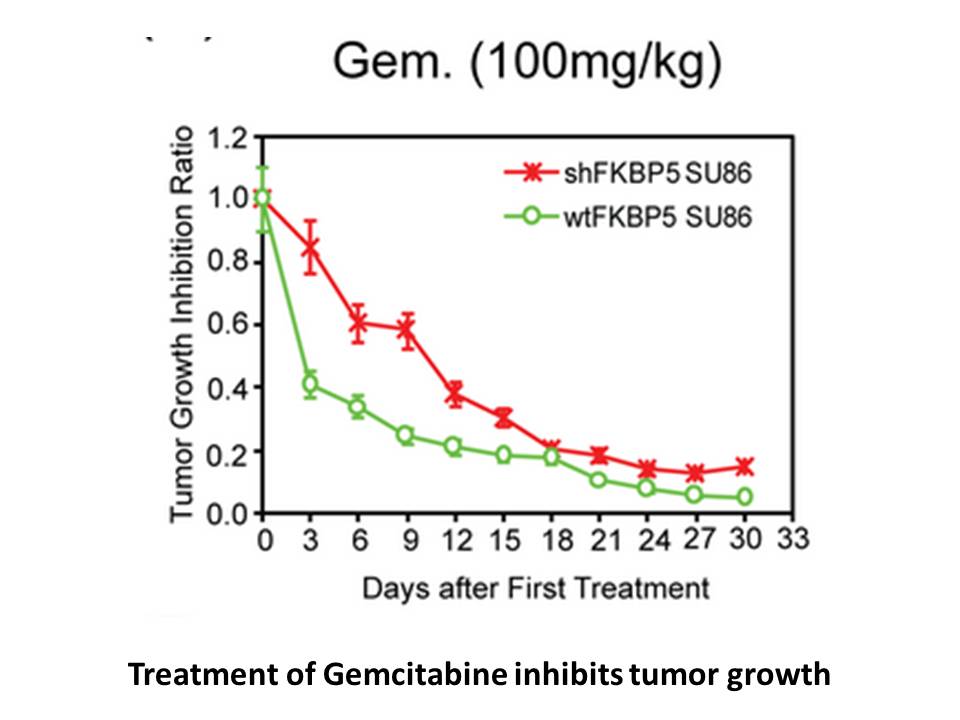
Notably, 64Cu-labeled dimeric exendin-4 subunit, which was designated as 64Cu-Mal2Sar-(exendin-4)2, showed higher tumor uptake than that of the monomeric exendin-4 subunit [245]. Besides the most commonly-used GLP-1R agonists exendin-3 and -4 and their derivatives, exendin (9-39) exhibits strong bin
-
Here we demonstrate an anti inflammatory and anticancer func
2021-09-23
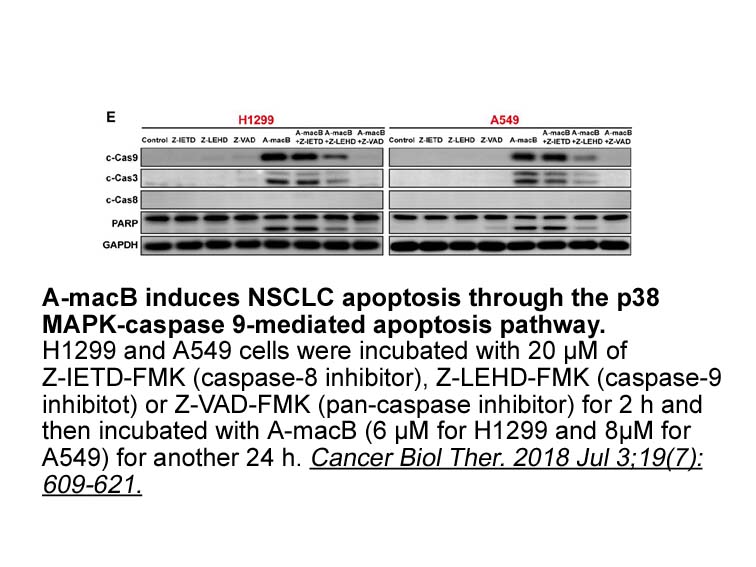
Here we demonstrate an anti-inflammatory and anticancer function for Gpr109a in colon. Gpr109a signaling imposed anti-inflammatory properties in colonic antigen-presenting cells, which in turn induced differentiation of Treg Almorexant sale and IL-10-producing T cells. Gpr109a was also required for
-
Considering that loss of LAG
2021-09-23
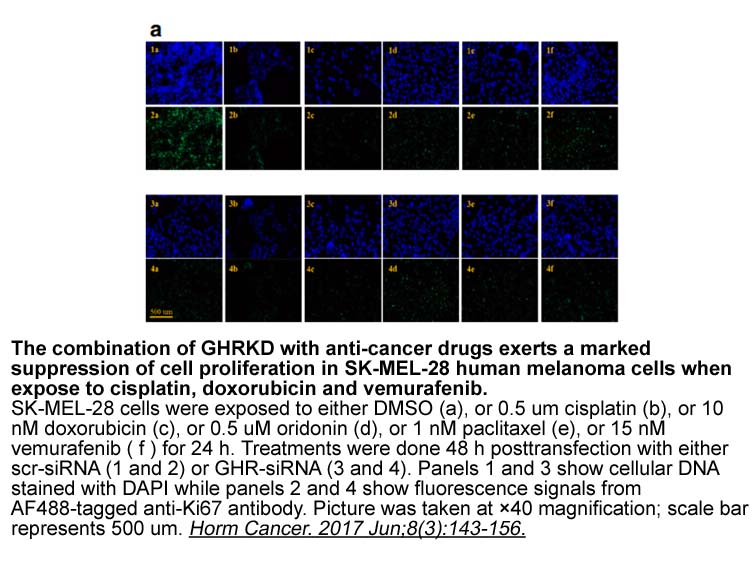
Considering that loss of LAG-3 Lisinopril dihydrate results in increased CD4+ T cell homeostatic expansion, and that the ability of a cell to proliferate is tightly coupled to its metabolic profile, we hypothesized that LAG-3 regulates naive CD4+ T cell metabolism. Our results indicate that, indeed
-
An alternative to the chemoenzymatic preparation
2021-09-23
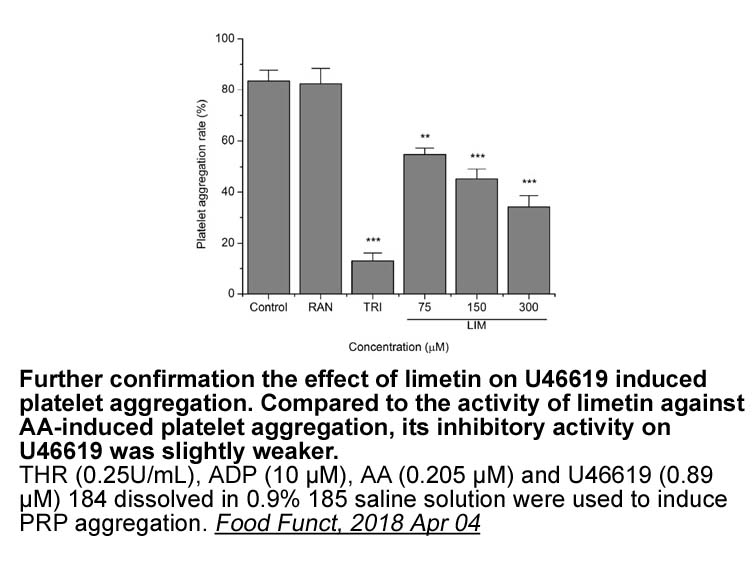
An alternative to the chemoenzymatic preparation of glycoproteins is the production through total chemical synthesis or semi-synthesis [2,3,]. Many successful glycoprotein syntheses are based on native chemical ligation (NCL) [11], a reaction where unprotected peptides and glycopeptides of any lengt
-
The experiments indicate that a
2021-09-23
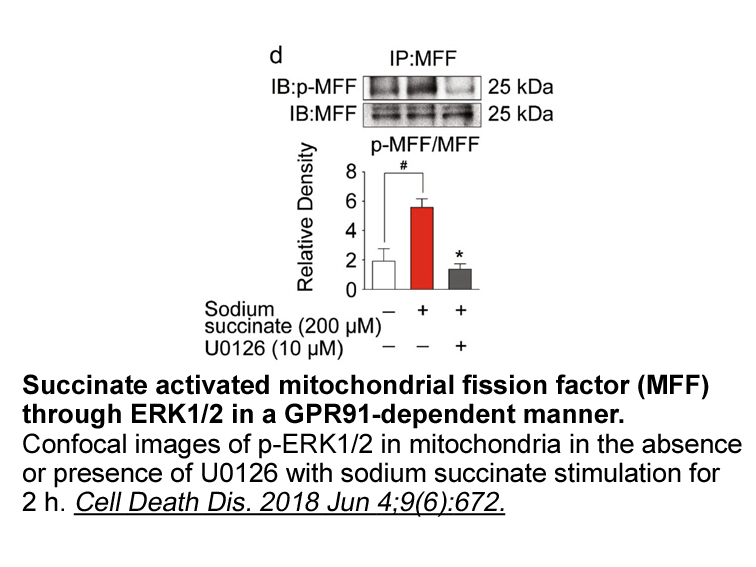
The experiments indicate that a major component of the vasodilatation is due to antagonism of α 1-adrenoceptors. Evidence for α1-adrenoceptor antagonism is that vasodilatation was observed in Ranolazine preconstricted with α1-adrenoceptor agonists, phenylephrine or methoxamine, but not in vessels p
-
Free fatty acids FFAs which are
2021-09-22
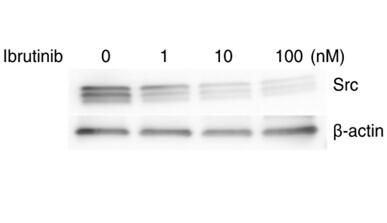
Free fatty acids (FFAs), which are obtained from dietary fat or endogenous synthesis, function as nutrients and signaling molecules. Studies have shown that free fatty Riboflavin receptors 1–4 which are G-protein coupled receptors, bind free fatty acids and serve as receptors for these FFAs. Short
16387 records 618/1093 page Previous Next First page 上5页 616617618619620 下5页 Last page