Archives
- 2026-08
- 2026-07
- 2026-06
- 2026-05
- 2026-04
- 2026-03
- 2026-02
- 2026-01
- 2025-12
- 2025-11
- 2025-10
- 2025-09
- 2025-03
- 2025-02
- 2025-01
- 2024-12
- 2024-11
- 2024-10
- 2024-09
- 2024-08
- 2024-07
- 2024-06
- 2024-05
- 2024-04
- 2024-03
- 2024-02
- 2024-01
- 2023-12
- 2023-11
- 2023-10
- 2023-09
- 2023-08
- 2023-07
- 2023-06
- 2023-05
- 2023-04
- 2023-03
- 2023-02
- 2023-01
- 2022-12
- 2022-11
- 2022-10
- 2022-09
- 2022-08
- 2022-07
- 2022-06
- 2022-05
- 2022-04
- 2022-03
- 2022-02
- 2022-01
- 2021-12
- 2021-11
- 2021-10
- 2021-09
- 2021-08
- 2021-07
- 2021-06
- 2021-05
- 2021-04
- 2021-03
- 2021-02
- 2021-01
- 2020-12
- 2020-11
- 2020-10
- 2020-09
- 2020-08
- 2020-07
- 2020-06
- 2020-05
- 2020-04
- 2020-03
- 2020-02
- 2020-01
- 2019-12
- 2019-11
- 2019-10
- 2019-09
- 2019-08
- 2019-07
- 2019-06
- 2019-05
- 2019-04
- 2018-07
-
br Materials and methods br Results and discussion br
2020-11-25
Materials and methods Results and discussion Conclusions Codon-optimized MGSK-Lys-C was expressed at a high level in an optimized expression system as inclusion bodies. The Lys-C activity reached its maximum with about 9340 nkat/Lculture under standard (chemical) refolding conditions. The r
-
Our results showed that in elastase induced AAA TGF
2020-11-25

Our results showed that in elastase-induced AAA, TGF-β neutralization finely tunes macrophage phenotype. Note that several studies have already addressed the role of M1 markers, such as IL-6 and IL-1β, or M2 markers, including IL-10 and TGF-β.4, 9, 10, 11 The expression and the role of ARG1 in AAA h
-
Although many of the hepatic responses observed on the first
2020-11-25
Although many of the hepatic responses observed on the first day of recovery attenuated over the course of the recovery period, minimal-to-mild centrilobular hepatocellular hypertrophy tended to persist. Mean absolute and relative liver weights had returned to control levels after 28 days of recover
-
To further define the importance of CYP A for OSC
2020-11-25
To further define the importance of CYP3A for OSC metabolism in vivo, a strong CYP3A inhibitor ketoconazole was used to test whether CYP3A would affect its metabolism. As expected, the biotransformation of OSC to SC was significantly decreased by ketoconazole at all three substrate concentrations. H
-
c-JUN peptide br Acknowledgements The present study was sup
2020-11-25

Acknowledgements The present study was supported by the Medical Science and Technology Program of Zhejiang Province2014KYA228 (Zhijun Zhou), 2016KYA195 (Jie Li) and 2017KY714 (Qingqing Xia); Zhejiang Provincial Natural Science Foundation of ChinaQ17H120001 (Jie Li); and Scientific Research Projec
-
br Lymphoplasmacytic lymphoma Waldenstrom macroglobulinemia
2020-11-25
Lymphoplasmacytic lymphoma/Waldenstrom macroglobulinemia Lymphoplasmacytic lymphoma (LPL) and its subgroup Waldenstrom macroglobulinemia (WM) are rare and indolent lymphomas that arise from fully differentiated B cells. The only family of GPCRs that has been well studied in LPL/WM is the chemokin
-
Oysters belong to the second largest animal
2020-11-25
Oysters belong to the second largest animal phylum Mollusca, and they are globally distributed aquaculture animals (Wang et al., 2018). A number of studies have demonstrated that oysters have evolved an integrated and complex innate immune system to recognize and eliminate various invaders. An array
-
SU 5402 Ubiquitination is a covalent attachment of amino aci
2020-11-25
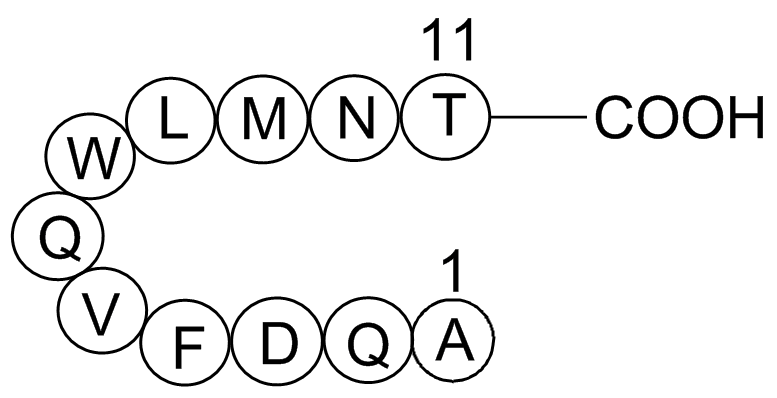
Ubiquitination is a covalent attachment of 76 amino SU 5402 ubiquitin molecules to target proteins, either as single moieties (mono-ubiquitination) or as poly-ubiquitin chains of different structures, formed through isopeptide bonds between specific lysines of one ubiquitin residue (for example K48
-
ask1 inhibitor br Effect of DPP Inhibitors on the
2020-11-25
Effect of DPP-4 Inhibitors on the Clinical Course of Heart Failure Four large-scale cardiovascular outcomes trials with DPP-4 inhibitors have been completed, and their findings have been published (Table 1) 31, 32, 33, 34. In 2 studies (with saxagliptin and alogliptin), DPP-4 inhibition was accom
-
br DNA end processing enzymes The simplest DSB
2020-11-25
DNA end processing enzymes The simplest DSB is one that consists of two blunt DNA ends as these termini can be re-joined without processing. However, DSBs induced by ionizing radiation and reactive oxygen species are notorious for producing DNA ends which are non-ligatable (“dirty ends”) and thus
-
alizarin While the mechanism of DHODH inhibition
2020-11-25

While the mechanism of DHODH inhibition-induced differentiation is not fully understood, this phenomenon may be caused by pyrimidine depletion. Pyrazofurin, an inhibitor of OMP decarboxylase, was able to induce differentiation and suggests pyrimidine depletion as a potential mechanism (Sykes et al.,
-
Mitochondrial depolarization induced by DHODH inhibition Fig
2020-11-25
Mitochondrial depolarization induced by DHODH inhibition (Figure 5A) may also contribute to the selective effects of DHODH inhibitors on KRAS mutant cells. If so, the effect may arise more from pro-apoptotic effects of mitochondrial depolarization (Lemasters et al., 1998) than from impaired oxidativ
-
br Materials and Methods br Results br Discussion
2020-11-25
Materials and Methods Results Discussion HSCs have been identified as major collagen-producing Tiplaxtinin in the injured liver (1), and activation of HSCs has become the central link for liver fibrosis (2). The factors that regulate the biological behavior of HSCs include soluble regulato
-
br DDR receptor and MMP expression
2020-11-25
DDR2 receptor and MMP-13 expression Type II collagen protein in articular cartilage is highly stable structure as its half-life is 117 years [43]. The chondrocytes have limited ability to synthesis type II collagen protein in the matrix of mature articular cartilage once the collagen gets disrupt
-
GSK 0660 br Preparation of Recombinant Proteins br
2020-11-25
Preparation of Recombinant Proteins Activity Assays The following solvents are used in the procedures described in this section: Data Analysis Aryl radical rearrangements typically result in a large number of products being generated by Bmp7. Approaches combining mass spectrometry and NMR
16384 records 787/1093 page Previous Next First page 上5页 786787788789790 下5页 Last page